handmade success
Is Candle Making Profitable? The Real Margins Explained
Most candle businesses aren't unprofitable because of bad candles — they're unprofitable because the owner doesn't know what each candle actually costs to make. Here's how to fix that.
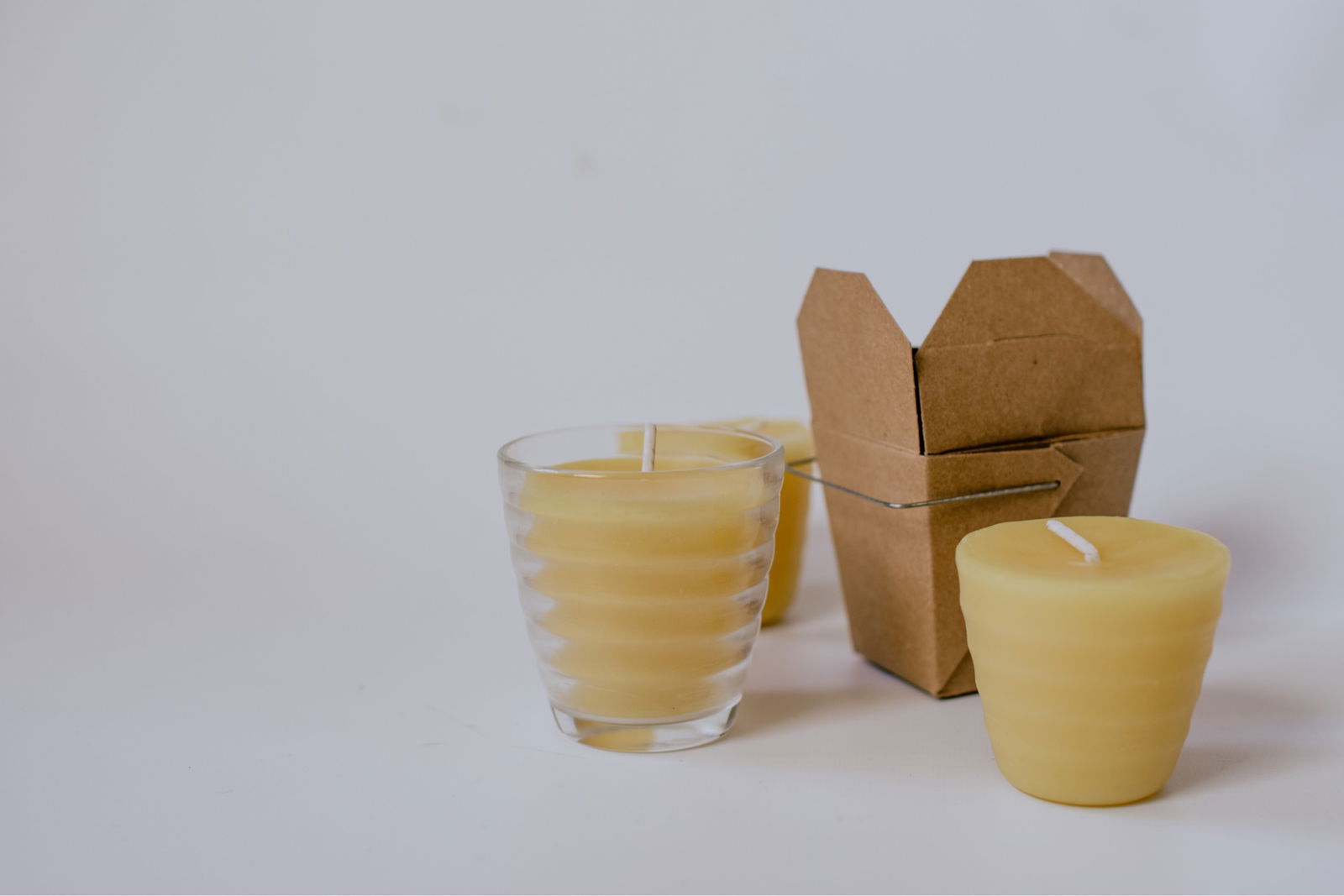
Most people start a candle business because they love making candles. The problem is that it’s entirely possible to be busy making candles (keeping up with orders, buying supplies, shipping packages) and still not make any real money.
Most candle businesses aren’t unprofitable because of bad candles. They’re unprofitable because the owner doesn’t know what each candle actually costs to make. And if you don’t know your true cost, you can’t set a price that covers it.
The good news: this is entirely fixable. It just takes knowing your numbers.
Last updated: April 2026
Need to get your raw material and product inventory under control?
Try Craftybase - the inventory and manufacturing solution for DTC sellers. Track raw materials and product stock levels (in real time!), COGS, shop floor assignment and much more.
It's your new production central.
Is a candle business actually profitable?
A candle business can be profitable (gross margins of 60-70% are achievable) but only when you know what each candle actually costs to make.
The profit potential is real. Handmade candles carry strong margins when priced correctly. A well-made soy candle in an 8oz jar might cost $4-6 to produce and sell for $16-22, giving you a gross margin of 60-70%. Do that at volume and you have a solid business.
The catch is that phrase when priced correctly. Most candle makers undercharge, not because they lack confidence, but because they’ve never done a proper cost breakdown. They know the wax price. They might have a rough idea of the fragrance cost. But they haven’t factored in wick tabs, labels, containers, the tissue paper in the box, the 12 minutes of labour per candle, or the PayPal fee on every Etsy sale.
The result is a business that looks busy but doesn’t pay the owner a real wage. That’s not a product problem, it’s a pricing problem, and the root cause is always the same: unknown costs.
What does it actually cost to make a candle?
A typical handmade 8oz soy candle costs around $6-7 all-in (roughly $3.41 in materials plus $3 in labour at $15/hr) before platform fees.
This is the section most candle business guides skip. Here’s exactly what goes into a single 8oz soy candle:
| Ingredient / Item | Quantity | Unit Cost | Cost per Candle |
|---|---|---|---|
| Soy wax | 7 oz | $0.08/oz | $0.56 |
| Fragrance oil | 0.7 oz (10% load) | $0.35/oz | $0.25 |
| Wick | 1 | $0.15 each | $0.15 |
| Wick tab | 1 | $0.05 each | $0.05 |
| Glass jar (8oz) | 1 | $1.40 each | $1.40 |
| Lid | 1 | $0.35 each | $0.35 |
| Label | 1 | $0.25 each | $0.25 |
| Packaging (tissue, bag) | 1 set | $0.40 | $0.40 |
| Materials total | $3.41 | ||
| Labour (12 min @ $15/hr) | $3.00 | ||
| Total cost per candle | $6.41 |
Selling price: $18.00. Gross margin: 64%. But only if you actually know that $6.41 number.
If you guessed your materials cost was “around $3” and set your price at $12 to seem competitive with other Etsy sellers, you’re making $2.59 per candle before you factor in Etsy fees, shipping supplies, or your own time.
Two things are worth noting in that table. First, the fragrance load matters (the amount of fragrance oil you use directly affects your cost per candle. Our free Candle Fragrance Load Calculator helps you find the right ratio for your wax type so you’re not over-fragrancing (and over-spending). Second, when any of these input prices change) and they do, especially fragrance oils, your cost per candle changes too. Tracking this manually in a spreadsheet gets messy fast.
When you store your candle recipe in Craftybase candle inventory software, it recalculates your cost per unit automatically whenever a supplier price changes. If your fragrance oil supplier raises prices by 15%, you’ll see the updated cost per candle without having to redo the maths yourself. See Craftybase’s recipe costing and pricing features to learn more about how the math is handled for you.
How to price your candles for profit
Knowing your cost is step one. Step two is building a price that actually works.
The formula: Cost of goods + overhead allocation + labour + target margin = selling price
A common mistake is pricing based on what other Etsy sellers charge. That’s backwards. If you don’t know what it costs you to make your candle, you have no idea whether that competitor’s price covers their costs either. They might be losing money too.
A useful starting point for handmade candles is a 4x keystone on materials cost alone, that’s a rough shortcut, not a formula. The proper approach is to work through the candle pricing formula step by step, factoring in your actual overhead and the wage you want to pay yourself.
Don’t undercut your way to customers. Handmade candles compete on quality, scent throw, and the story behind them, not price. The buyers who only care about price will buy from a mass manufacturer. The buyers who’ll pay $20 for your candle are looking for something different, and underpricing signals the opposite.
Choosing your candle type and niche
Once you know your numbers, you can make better product decisions. Different wax types carry different costs and appeal to different buyers:
- Soy wax burns cleanly, has strong scent throw, and resonates with eco-conscious buyers. Mid-range cost.
- Beeswax burns longer, has natural honey notes, and commands premium pricing. Higher cost.
- Paraffin is the most affordable and widely used in commercial candles. Some buyers prefer to avoid it.
- Coconut wax is a premium option with excellent scent throw and a clean burn profile.
The right wax is whichever one your customers value and you can price correctly for. That’s a cost-and-margin decision as much as a product one.
Your niche might be scent-focused (seasonal collections, bold single-note scents), container-focused (vintage jars, concrete vessels, apothecary-style), or occasion-focused (wedding favours, self-care gifting). The tighter your niche, the easier it is to stand out, and the more latitude you have on price.
Where to source candle-making supplies
Your local craft store works for getting started, but once you’re producing regularly, buying in bulk from specialist suppliers drops your per-unit cost significantly.
When you buy supplies in bulk, track the cost-per-unit at the time of purchase, not just what you spent. A 10kg bag of soy wax at $65 costs $0.065/oz. A 500g trial pack at $8.50 costs $0.17/oz. Your recipe costing should use the correct per-unit figure, not just “however much I spent last month on wax.”
This is another area where inventory software earns its keep. Craftybase tracks your materials at their actual purchase cost and uses that figure when calculating recipe costs, so your margins stay accurate even when you’re buying in different quantities from different suppliers.
Running your candle business day-to-day
Once the product and pricing foundations are in place, the operational side is about staying consistent.
Inventory management is the practical foundation. You need to know what raw materials you have on hand, what’s running low, and what to reorder before you run out mid-production. A solid candle inventory system connects your materials stock to your production runs, so you always know how many candles you can make from what’s on the shelf. If you prefer to start with a spreadsheet, our free candle inventory spreadsheet is a good starting point.
Selling channels shape your operations. Etsy is the most common starting point for candle makers and works well for handmade positioning. As you grow, you might add your own website, wholesale accounts, or local markets. Each channel has different margin dynamics, Etsy fees (6.5% transaction + listing fees) need to be factored into your pricing from the start, not treated as a surprise at the end of the month.
Marketing for handmade candles is mostly about showing the product in context, lifestyle photography, scent descriptions that evoke a feeling, and the story of how you make them. Social media (especially Instagram and Pinterest) suits candles well. Word of mouth matters more than most makers expect; packaging that delights the person receiving a candle as a gift does a lot of the work.
The single most important operational habit: review your margins quarterly. Supplier prices shift. Your labour gets more efficient. Etsy changes its fee structure. A margin that worked last year may not be working now, and the only way to know is to have an accurate, up-to-date cost breakdown for every product you sell. Our full guide to manufacturing inventory management covers how to set up that tracking system properly.
Frequently Asked Questions
How profitable are candle businesses?
Candle businesses can be quite profitable when products are priced correctly. Handmade candles typically carry gross margins of 60–70% when the full cost of materials, labour, and packaging is factored in. The challenge is that many candle makers underprice because they haven't done a detailed cost breakdown — which turns a potentially strong margin into barely breaking even. Profitability comes from knowing your true cost per candle and pricing from that number, not from what competitors charge.
What's the profit margin on handmade candles?
A typical 8oz handmade soy candle costs $4–7 to produce (materials, packaging, and labour), and retails for $16–22. That gives a gross margin of around 60–70%. Net margin after platform fees, marketing, and overhead depends heavily on volume and how efficiently you're sourcing. The makers with the strongest margins tend to buy materials in bulk, track their recipe costs accurately, and review their pricing at least once a year as ingredient prices change.
How do I know if I'm pricing my candles correctly?
Start by calculating your exact cost per candle — every ingredient, every consumable, your packaging, and a labour charge for your time. Then apply a markup that covers your platform fees, a share of your overhead (workspace, equipment), and leaves you with a real profit. If your current price doesn't cover all of that, it's too low — regardless of what competitors charge. The candle pricing formula in our candle pricing guide walks through the full calculation step by step.
What software do candle makers use to track inventory and costs?
Craftybase is built specifically for small-batch makers like candle businesses. It lets you store your candle recipes, tracks your raw material stock (wax, fragrance oils, wicks, containers), and automatically calculates your cost per unit from your actual ingredient purchase prices. When a supplier raises their price, your recipe cost updates automatically. It also generates COGS reports for tax time without requiring a separate accounting system. Many candle makers start with a spreadsheet and move to Craftybase once the manual tracking becomes unmanageable.
How do I calculate the cost of making a candle?
List every ingredient and its quantity per candle (wax, fragrance oil, wick, wick tab, container, lid, label, packaging). For each ingredient, calculate the cost per unit from your most recent purchase — for example, a 10kg bag of soy wax at $65 works out to $0.065/oz. Multiply each ingredient's per-unit cost by the quantity used in one candle, then add them up for your total materials cost. Add a labour charge (your time in minutes × your hourly rate) to get your total cost per candle. Our free Candle Cost Calculator automates this calculation once you've entered your ingredient prices.
Need to get your raw material and product inventory under control?
Try Craftybase - the inventory and manufacturing solution for DTC sellers. Track raw materials and product stock levels (in real time!), COGS, shop floor assignment and much more.
It's your new production central.